

Pay as you go
£ 36.00/Hour
Book now

Junctions are where a lot of driving tests start going wrong.
Not because learners can’t drive, but because junctions force you to do several things at once. You’re checking mirrors, judging traffic speed, controlling the clutch, watching pedestrians, deciding whether it’s safe to emerge, and trying not to panic while another driver waits behind you.
That pressure causes many learners to make decisions they normally wouldn’t rush during lessons.
At Impulse Drive, we’ve seen that most junction mistakes are actually predictable. The learner usually starts approaching too quickly, rushing observations, or focusing more on traffic behind them than on the junction ahead.
Once you know what the examiner is watching for, junctions stop feeling like guesswork and start feeling like a repeatable routine.
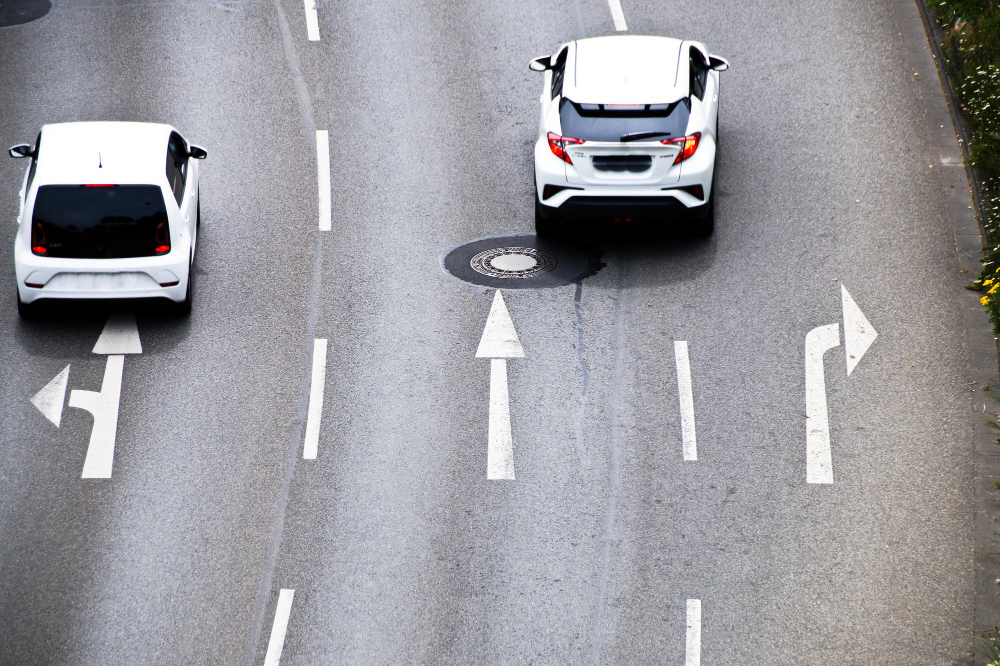
Junctions test multiple driving skills at the same time:
That combination is exactly why they catch learners out so often. One thing many people misunderstand is this:
Examiners are not looking for aggressive confidence. They’re looking for calm judgement.
A learner who hesitates slightly at a junction may only receive a minor fault. A learner who pulls out unsafely because they felt pressured can fail instantly. That’s a huge difference.
And surprisingly, many junction faults actually begin before the learner reaches the junction itself.
Experienced instructors can usually tell when someone is about to struggle because the approach starts changing:
The examiner notices all of this.
At junctions, examiners mainly want to see safe observations, smooth speed control, correct positioning, awareness of cyclists and pedestrians, good judgement of approaching traffic, and safe emerging.
Stalling is not usually the biggest issue. Poor observations and unsafe judgement are far more serious.
You can recover from a stall and still pass, but emerging without properly checking can quickly become a serious or dangerous fault.
According to GOV.UK, learners fail the driving test if they make a serious or dangerous fault, and incorrect positioning when turning right at junctions is listed among common reasons for failing.
That is why junctions are not just about moving off smoothly. They test whether you can observe, position, judge traffic, and make safe decisions under pressure.
A safe junction routine keeps you calm because it gives your brain something clear to follow. You are not guessing. You are following the same process each time.
Late mirror checks create rushed decisions. A lot of learners wait until the last second before checking mirrors, which usually leads to harder braking, messy positioning, and unnecessary pressure.
Check your mirrors before you slow down so you know what is happening behind you. This gives you time to plan the junction smoothly instead of reacting at the last moment.
Signal clearly when it benefits other road users. Do not signal too late, and do not signal so early that it confuses people about where you are going.
A good signal should make your intention clear, not create uncertainty.
Your road position should show where you intend to go. If you are turning left, stay safely to the left. If you are turning right, move into the correct position without drifting, cutting across the road, or blocking traffic unnecessarily.
Poor positioning at junctions can quickly make the situation harder than it needs to be.
One of the biggest causes of junction faults is approaching too quickly.
When learners carry too much speed into junctions, observations become rushed, steering tightens, clutch control gets messy, and judgement becomes weaker.
Slowing down earlier creates thinking space. That is the real goal.
Choose a gear that matches your speed and the situation. If the junction is open and clear, you may be able to continue smoothly. If it is closed or visibility is poor, you may need to move very slowly and prepare to stop.
The right gear helps you stay in control instead of fighting the car at the worst moment.
Do not just flick your eyes left and right. Look properly.
Check for cars, cyclists, pedestrians, parked vehicles, turning traffic, and anything that may affect your decision. Examiners notice the difference between a quick glance and a proper observation.
This is one of the most common mistakes at closed junctions.
The learner edges forward, takes one quick glance, then commits before visibility is actually clear. Examiners notice this immediately.
If your view is blocked by parked cars, vans, hedges, walls, or buildings, creep forward slowly until you can see clearly. The key is to creep, not rush.
Do not let another driver pressure you into taking a gap that does not feel safe.
Your examiner is not marking the patience of the driver behind you. They are marking whether your decision was safe.
A safe delay is much better than a rushed move that forces another road user to brake or react suddenly.
One learner came into lessons rushing through every closed junction because they were worried about holding up traffic. After practising slow creeping, wider scanning, and waiting for a gap that did not affect other drivers, their junction faults dropped quickly in mock tests. The biggest change was not confidence. It was patience.
A safe gap is not just a space in traffic. It is a space you can enter without making another road user slow down, swerve, or react suddenly.
Good drivers do not simply react to gaps. They assess them calmly first.
Driving instructors often use routines like MSM and PSL because they help learners stay organised under pressure.
MSM means you check your mirrors first, signal when needed, then carry out the manoeuvre safely. This helps stop rushed decisions because you are not signalling, steering, and observing all at the same time.
PSL is especially useful when approaching junctions. First, position the car correctly. Then reduce your speed. Then look properly before deciding whether it is safe to go.
These routines are not just things to memorise for lessons. They help you build a calm approach that examiners can clearly see during the test.
Not every junction works the same way. Some are open and easy to read. Others are tight, busy, or awkward because your view is blocked. The more junction types you practise, the less likely you are to panic when one appears on your test route.
Open junctions give you a clear view of the road early. You can usually see approaching traffic before reaching the give-way line, which makes planning easier.
The mistake learners make here is assuming that clear visibility means they can rush. You still need mirrors, speed control, positioning, and proper judgement before emerging.
Closed junctions are harder because your view is restricted. Parked cars, vans, walls, hedges, buildings, or bends can stop you from seeing approaching traffic clearly.
At closed junctions, creeping forward slowly is completely normal. What matters is that you keep the car under control and continue observing as your view improves.
T-junctions are very common in UK driving tests. The main risks are stopping too late, cutting corners, poor positioning, or emerging before checking properly.
When turning left or right from a T-junction, use a calm routine: mirrors, signal if needed, position correctly, slow down, look both ways, then move only when it is safe.
Y-junctions can feel awkward because the roads meet at an angle. Learners sometimes misjudge where to position the car or fail to check properly because the road layout feels less obvious than a normal T-junction.
Take your time, read the road markings, check signs, and make sure you know who has priority before moving.
Crossroads require careful awareness because traffic can come from several directions. You may need to judge vehicles ahead, traffic from the left and right, pedestrians crossing, and cars turning across your path.
The key is not to focus on one direction only. Keep scanning until you are sure your move is safe.
Unmarked junctions can catch learners out because there may be no clear give-way lines, stop lines, or signs. That means you need to slow down, read the road carefully, and avoid assuming you automatically have priority.
If you are unsure, reduce speed and assess the situation calmly. Guessing at an unmarked junction is where problems usually start.
Slip roads test your ability to build speed, check mirrors, judge gaps, and merge safely. The biggest mistake is treating a slip road like a normal junction and joining too slowly, or rushing into a gap that is not safe.
Use your mirrors, check your blind spot where needed, match the speed of traffic where possible, and merge only when it is safe.
Traffic lights do not remove the need for observations. Even when the light is green, you still need to check that the junction is clear before moving through.
Watch for pedestrians, cyclists, vehicles turning across you, and traffic that may still be clearing the junction.
Box junctions make learners nervous because traffic can stop suddenly. The rule is simple: do not enter unless your exit is clear.
If you enter too early and block the box, it can show poor planning and judgement. Stay patient and wait until you can fully clear the junction.
Learners may face several junction layouts during the practical driving test, so it helps to practise more than just basic open and closed junctions.
Junction Type
Main Risk
What Examiners Want to See
Open junction
Emerging too casually
Controlled speed and proper observations
Closed junction
Moving before visibility is clear
Slow creeping and continuous looking
T-junction
Poor positioning or late stopping
Correct position, mirrors, signal, safe judgement
Y-junction
Confusion over angle and priority
Careful positioning and clear road reading
Crossroads
Missing traffic from one direction
Full scanning before moving
Unmarked junction
Assuming priority
Slower approach and cautious judgement
Slip road
Poor merging or weak speed judgement
Mirror checks, speed matching, safe gap selection
Traffic light junction
Moving without checking
Awareness even when the lights are green
Box junction
Blocking traffic
Waiting until the exit is clear
Yes, you can fail your driving test at a junction if your decision creates danger, affects another road user, or shows poor awareness.
Common serious faults at junctions include:
Minor faults are usually less risky. These might include slight hesitation, a small delay before moving, or rough clutch control, as long as you recover safely and do not affect anyone else.
That is why the safest learner is not always the fastest learner. Examiners want to see good judgement, not rushed confidence.
GOV.UK also lists incorrect positioning when turning right at junctions among common driving test failure reasons, which is why correct road position matters so much during the test.
If you are unsure how examiners mark minor, serious, and dangerous faults, read our full guide on Driving Test Results Explained: Pass, Fail, Minors & Majors before your test.
Driving test junctions become much easier once you stop treating them like rushed decisions and start treating them like observation exercises. Most learners who struggle at junctions are usually reacting to pressure instead of calmly reading the road ahead.
The good news is that this improves quickly with the right practice, proper guidance, and experience on real test routes.
At Impulse Drive, we help learners build the confidence, awareness, and judgement needed to handle busy junctions safely during the driving test.
Ready to feel calmer and more prepared behind the wheel? Book your lessons with our instructors and start driving with confidence.
Not always. Slight hesitation at junctions may only result in a minor fault if it does not affect traffic. However, repeated hesitation or refusing safe opportunities to move could become a serious fault during the practical driving test.
The safest way to approach junctions in a driving test is by slowing down early, checking mirrors in good time, positioning correctly, observing both directions carefully, and only emerging when it is genuinely safe to do so.
Open junctions allow you to see approaching traffic clearly from further away. Closed junctions have restricted visibility because of parked cars, walls, hedges, or buildings, which means observations need to be slower and more careful before emerging safely.
Stalling at a junction does not automatically fail your driving test. What matters most is how safely and calmly you recover. If the stall causes danger or affects another road user, it could become a serious fault.
PSL means Position, Speed, Look. It helps learners position the car correctly, reduce speed early, and make proper observations before deciding whether to emerge.