

Pay as you go
£ 36.00/Hour
Book now

Failing your driving test can feel frustrating, disappointing, and overwhelming, especially when you felt close to passing. The good news is that a failed driving test is extremely common, and it doesn’t mean you’re a bad driver.
What matters most is understanding why you failed, what counts as a fail, and what steps to take next so you pass with confidence.
This guide looks into explaining the most common major and minor faults, instant fails, and exactly how and when to rebook your driving test after failing.
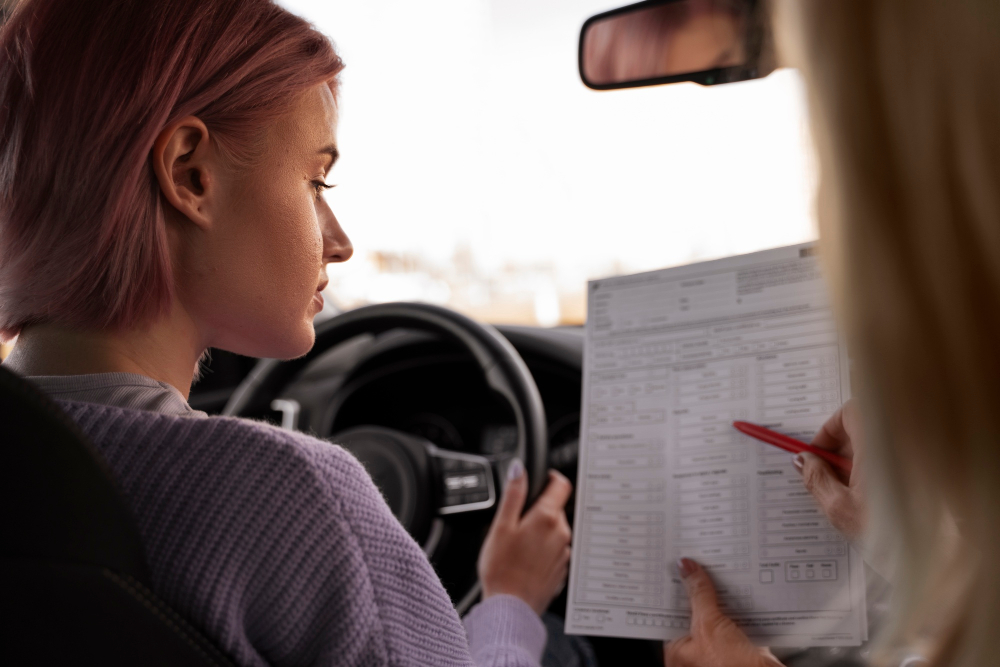
After a failed driving test, the examiner will take a few minutes to explain exactly why you didn’t pass. This feedback is not a formality; it’s one of the most valuable parts of the test and is designed to help you succeed next time.
The examiner will clearly outline:
You’ll also receive a driving test result sheet showing a full breakdown of your faults. This document highlights patterns in your driving, not just isolated mistakes, making it an essential guide for focused practice before you rebook.
Using this feedback properly can significantly increase your chances of passing your next test.
Not every mistake leads to a failed driving test. What matters is the type of fault and how often it occurs. Understanding the difference between minor, major, and dangerous faults helps explain exactly why a test is marked as a fail.
Your driving test result is broken down into three types of faults:
These are small mistakes that do not pose immediate danger, such as a missed mirror check. One or two won’t cause a fail, but repeated minor faults can.
These occur when a mistake could put you or others at risk. A single serious fault results in an automatic fail.
These involve actual danger to you, the examiner, or other road users and always result in an immediate fail.
You can make up to 14 minor faults and still pass the driving test. You will fail if you receive:
Now that you know how many faults can lead to a failed driving test, it’s important to understand how those faults are classified.
Let’s take a closer look at the different categories of driving test faults and what each one means.
Major faults, also known as serious faults, are mistakes that show a lack of safe judgment and create potential risk on the road. Any single major fault during your test will result in an automatic fail, even if the rest of your driving is to a good standard.
Some of the most common major fails in driving tests include:
Failing to Observe Properly at Junctions
Not checking adequately before pulling out, especially at roundabouts or emerging from side roads.
Pulling Out and Causing Another Vehicle to Slow or Stop
Forcing another driver to brake or change direction to avoid you is classed as a serious fault.
Not Checking Mirrors Before Changing Direction
Missing mirror checks before signalling, turning, or changing lanes can endanger vehicles around you.
Poor Lane Discipline
Drifting between lanes, choosing the wrong lane at junctions, or not maintaining a consistent road position.
Ignoring Traffic Signs or Signals
Failing to respond correctly to stop signs, give way markings, traffic lights, or road markings.
Understanding these major faults helps you focus your practice on areas that are most likely to cause a driving test fail, increasing your chances of passing next time.
After a driving test doesn’t go according to plan, many learners ask how soon they can rebook. Fortunately, there’s no penalty for failing, and the rebooking process is quick and easy.
In the UK:
This means you don’t need to delay booking, even if you plan to take extra lessons before your next attempt.
If you’ve failed your driving test, rebooking is quite simple and can be done online in just a few easy steps.
While waiting for your next test, use the time to review your fault sheet, practise weak areas, and work with your instructor to correct any recurring mistakes.
To avoid another driving test fail, focus on targeted improvement rather than general practice. Your previous test report clearly shows what needs attention, so start by fixing the specific faults most likely to be marked again.
Practising in realistic, test-style conditions helps build confidence and reduce nerves, particularly at junctions, roundabouts, and busy roads. Working with ADI-qualified instructors is especially effective, as they understand exactly what examiners look for and can correct habits quickly.
Structured driving lesson courses and mock tests improve anticipation, observation, and decision-making, helping you stay calm, controlled, and fully prepared to pass next time.
Failing your driving test can feel discouraging, but a failed driving test is often one of the most valuable learning opportunities you’ll get.
By understanding your faults, rebooking at the right time, and practising with purpose, you can turn a fail into a confident pass.
With expert guidance, structured lessons, and mock test support from Impulse Drive, you’ll be fully prepared to pass your next driving test and get on the road with confidence.
You’ll fail with 15 minor faults, one major (serious) fault, or one dangerous fault.
No. There’s no limit on attempts you can keep rebooking until you pass.
Review your fault sheet, practise weak areas, take mock tests, and get structured support from a professional driving school like Impulse Drive.
Instant fails on the driving test UK include dangerous actions such as running a red light, pulling out and causing another road user to brake, or losing control of the vehicle.
Automatic fails on the driving test UK are serious or dangerous faults that immediately end your chances of passing, including ignoring traffic signs, dangerous manoeuvres, or creating a risk to others.