

Pay as you go
£ 36.00/Hour
Book now

Getting started as a learner driver in the UK is where the real adventure begins!
Once you’ve got your provisional licence and a bit of confidence, it’s time to hit the road and learn the basics.
But before that, here’s everything you’ll need to start driving safely and legally.

Getting ready before you start the engine helps ensure a safe, confident learning experience.
Once you’ve gotten all of this under your belt, that is when you can start going on your first drive.
Starting small builds confidence and control before entering real traffic.
Learning to drive takes patience, consistency, and proper guidance. This stage focuses on building safe habits, improving confidence, and preparing for your driving tests.
After completing your lessons and practice, you’re ready to prepare for the theory and practical driving tests, the final steps toward earning your full UK driving licence.
To qualify for a full licence, every learner driver must pass two official tests managed by the Driver and Vehicle Standards Agency (DVSA):
The theory driving test checks how well you understand UK road rules, signs, and safe driving practices. It has 50 multiple-choice questions and a hazard perception test with 14 short video clips where you identify developing hazards by clicking as soon as you spot them.
After passing the theory test, you can book the practical driving test via GOV.UK or can contact us, where we can help you to learn to drive and book your practical tests for you.
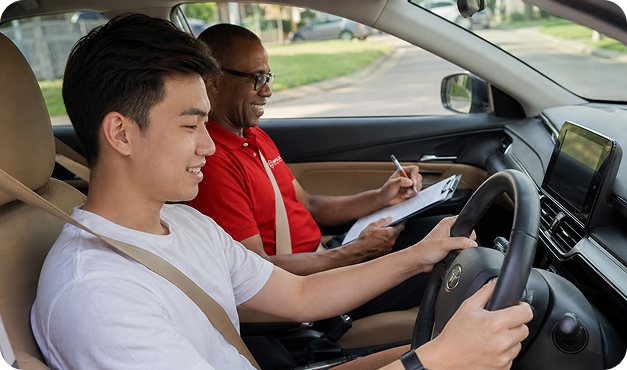
The practical driving test assesses your ability to drive safely and confidently in real conditions. You’ll demonstrate car control, awareness, and decision-making while following road signs, handling traffic, and performing basic manoeuvres independently.
Evaluates driving control, observation, and decision-making. Passing both earns you a full UK driving licence.
Once you’ve passed both your theory and practical driving tests, you’ll receive your full UK driving licence.
Start building confidence by cruising along familiar streets before taking on Manchester’s busier roads. Stay sharp, keep your car in top shape, and enjoy every drive as you turn from learner to a confident driver.
If you’re ready to begin your driving journey, check out Impulse Drive and start learning with certified instructors who’ll guide you every step of the way.
A supervising driver must be at least 21 years old, hold a full UK driving licence for at least 3 years, and be qualified to drive the same type of vehicle (manual or automatic).
Learner drivers in the UK must hold a valid provisional licence, display L plates, drive only with supervision, and have learner driver insurance. They can’t drive on motorways unless accompanied by an approved instructor in a dual-controlled car.
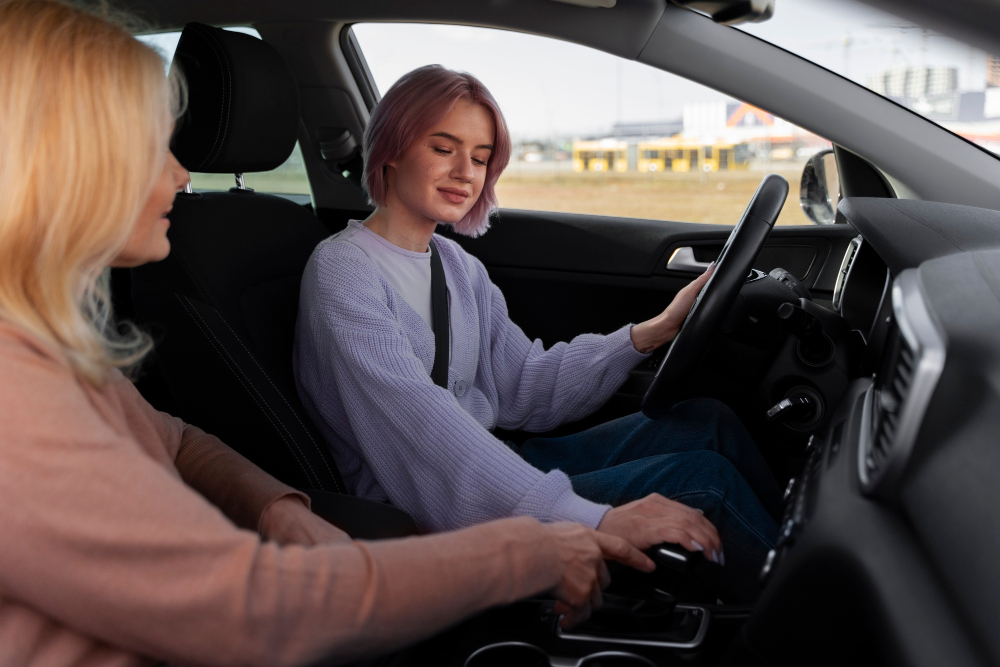
Set seat/mirrors, learn controls with the engine off, then practise gentle starts/stops and steering in an empty car park. If using a family car, ensure learner driver insurance is active and a qualified supervisor is present.
Yes, learner drivers can drive at night if supervised correctly and the car has working lights and valid insurance. Night lessons are good for improving observation and awareness.
The first thing a learner driver should practise is mastering basic car control, starting, stopping, and steering while following learner driver rules and laws, such as displaying L plates, driving with supervision, and keeping within legal speed limits.
Yes, you can practise driving in your parents’ car if you have a provisional licence, valid learner driver insurance, and follow learner driver rules and laws, including being supervised by someone over 21 with three years’ driving experience.