

Pay as you go
£ 36.00/Hour
Book now

Passing your driving test is an exciting step toward independence, but many learners worry about failing on their first attempt. If you are wondering how to pass your driving test first time, the key is preparation, confidence, and avoiding common mistakes.
The Manchester driving test often includes busy roads, roundabouts, and junctions that require strong observation and good decision-making. Examiners are not expecting perfect driving, but they do want to see safe habits and awareness in traffic.
With the right preparation and consistent practice, passing on your first attempt is possible. In this guide, we share 12 practical driving test tips to help you succeed.
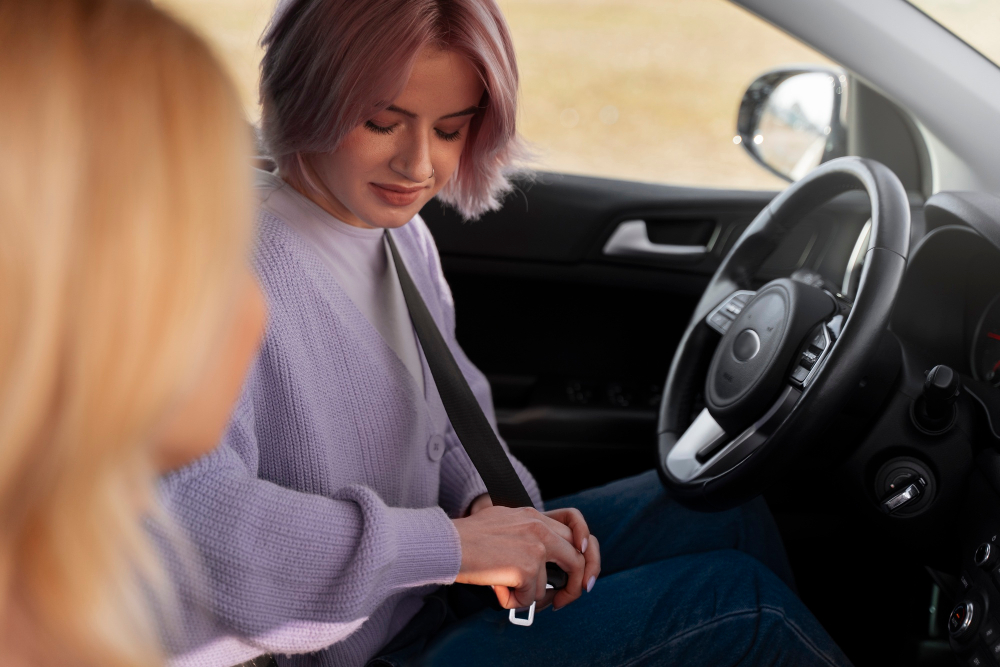
To pass your driving test the first time in Manchester, focus on strong observation, smooth vehicle control, and safe decision-making in traffic.
Practising regularly, taking mock driving tests, and learning how to manage driving test nerves can significantly increase your chances of success.
Understanding what examiners expect during the practical driving test will also help you stay confident and perform well on test day.
Before focusing on tips, it is important to understand how the DVSA practical driving test works. The test is designed to assess whether a learner driver can drive safely and independently on public roads.
The practical driving test usually lasts around 40 minutes. During this time, the examiner will assess your ability to drive safely in a variety of road conditions, including residential streets, junctions, and busier traffic areas.
Part of the test involves independent driving, which typically lasts about 20 minutes. You may be asked to follow directions from a sat nav or road signs while continuing to drive safely.
During the test, you will normally complete one manoeuvre, such as:
You may also be asked to perform an emergency stop during the test.
To help you prepare effectively, here are 12 practical driving test tips that can improve your chances of passing your Manchester driving test on the first attempt.
One of the most important habits examiners look for is proper use of mirrors and signals. Before turning, changing lanes, or slowing down, always check your mirrors and signal clearly. Consistently following the mirror signal manoeuvre routine shows that you are aware of surrounding traffic and driving safely.
Feeling nervous before your driving test is completely normal. Many learners experience driving test nerves, especially when they know the examiner is assessing every action. Try to stay calm, breathe steadily, and focus only on the road ahead. Confidence usually comes from regular practice and preparation.
Practising common Manchester driving test routes can help you become familiar with junctions, roundabouts, and traffic conditions that often appear during the test.
Practising them during your driving lessons can help you learn how to position your vehicle correctly, judge gaps in traffic, and enter safely.
Driving at the correct speed is essential. Driving too slowly may show hesitation, while driving too fast can lead to faults. Always follow speed limits and stay in the correct lane, especially on dual carriageways or multi-lane roads.
Examiners carefully watch how you approach junctions. Always check both directions, look for pedestrians, cyclists, and approaching vehicles, and move only when it is safe. Clear observation is one of the most important factors during the DVSA practical driving test.
Manoeuvres are a standard part of the test. Practise parking techniques until they feel natural. Smooth control of the vehicle, accurate positioning, and careful observation are key to performing manoeuvres successfully.
Good drivers constantly scan the road ahead and anticipate possible hazards. That includes pedestrians crossing, vehicles slowing down, or cyclists moving into your lane. Developing strong hazard awareness will help you react safely in real road situations.
A useful way to prepare is by taking a mock driving test with your instructor. It simulates the real exam environment and helps identify any mistakes that need improvement before your actual test.
Many learners fail because of small but avoidable mistakes. Some of the most common errors include poor mirror checks, incorrect signalling, hesitation in traffic, or improper lane positioning.
Preparing properly on test day can reduce stress. A simple driving test checklist should include bringing your provisional licence, wearing comfortable footwear, and arriving at the test centre early.
During the independent driving section, you may follow sat nav directions or road signs. Do not worry if you miss a turn. The examiner will guide you back on route. Focus on safe driving rather than worrying about navigation.
One of the best ways to pass your driving test is to treat it like a normal driving lesson. Stay relaxed, follow the rules of the road, and focus on driving safely. Examiners are mainly looking for safe decision-making and confident control of the vehicle.
Understanding why learners fail can help you avoid similar mistakes during your test. Many failures result from small errors that can easily be prevented with proper preparation and practice.
Common Mistake
Why It Causes Failure
Poor observation at junctions
Failing to check properly for traffic, pedestrians, or cyclists before moving off can lead to a serious accident.
Not checking mirrors before changing direction.
Examiners expect regular mirror checks before turning, slowing down, or changing lanes.
Incorrect signalling
Signalling too late, too early, or unnecessarily can confuse other road users.
Hesitation in heavy traffic
Waiting too long at junctions or roundabouts may show a lack of confidence and awareness.
Poor lane discipline
Incorrect positioning on the road or drifting between lanes can lead to faults during the test.
Being aware of these mistakes can help you improve your driving test preparation and increase your chances of passing your driving test successfully.
Preparing properly before your driving test can help you feel more confident and focused on the day of your test. A simple checklist can make sure you are ready and reduce unnecessary stress.
Before your driving test, remember to:
Following this checklist can help you stay calm and better prepared on test day.
On average, learners take around 40 to 50 hours of professional driving lessons, along with additional private practice, before they are ready to take the practical driving test.
However, the exact number varies depending on how quickly a learner develops confidence and driving skills.
Passing your driving test on the first attempt is achievable with the right preparation, regular practice, and a calm mindset. If you are wondering how to pass your driving test first time, focus on strong observation, safe decision-making, and mastering essential driving skills.
If you want expert support as you prepare for your test, Impulse Drive offers professional driving lessons to help learners build confidence and develop safe driving habits.
Ready to pass your driving test first time in Manchester?
Book your lessons with Impulse Drive today and take the next step toward becoming a safe and confident driver.
You can make up to 15 minor faults during the practical driving test and still pass. However, any serious or dangerous fault will result in an immediate fail.
The practical driving test cost in the UK is typically £62 on weekdays and £75 for evenings, weekends, or bank holidays.
The practical driving test usually lasts around 40 minutes. During this time, the examiner will assess your ability to drive safely in different traffic situations, complete one manoeuvre, and follow directions during the independent driving section.
You must bring your provisional driving licence to the test. It is also recommended to wear comfortable footwear and arrive early so you have time to relax before the test begins.
Yes. Even if the rest of your driving is good, one serious or dangerous fault will result in an immediate fail during the DVSA practical driving test. That is why observation, safe decision-making, and following road rules are extremely important.