


Pay as you go
£ 36.00/Hour
Book now

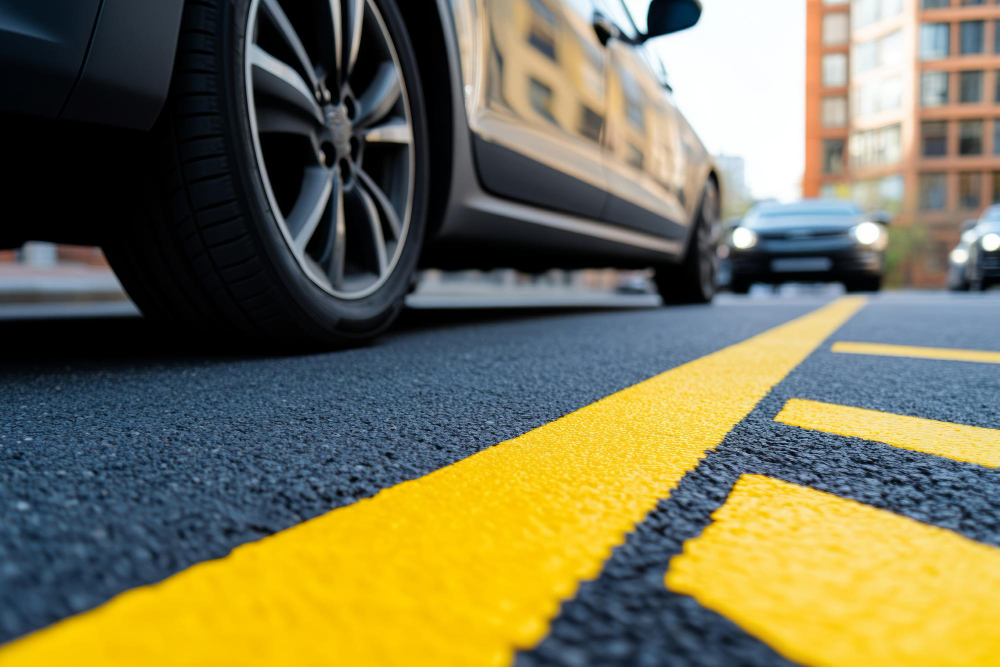
UK road markings tell drivers where to drive, stop, wait, give way, overtake, park, or use a specific lane. White lines usually guide traffic flow, yellow lines often show parking or waiting restrictions, and markings like box junctions, zig-zags, bus lanes, cycle lanes, and KEEP CLEAR signs come with extra rules learners need to know.
At first, it can feel like the road is speaking in code. One line says you can cross. Another says absolutely not. A yellow box quietly tests your patience.
This UK road markings guide explains the main lines, colours, and rules, so you can read the road earlier during lessons, theory revision, and the driving test.
Road Marking
What It Means
Learner Tip
Broken white line
Separates lanes or traffic flows
Cross only when safe and necessary
Solid white line
Marks an edge, lane boundary, or restriction
Do not cross unless allowed
Double white lines
Controls overtaking and crossing
Check whether the solid line is on your side
Single yellow line
Waiting restrictions apply at certain times
Look for nearby signs
Double yellow lines
No waiting at any time
Do not assume weekends are different
Yellow box junction
Keep the junction clear
Do not enter unless your exit is clear
Zig-zag lines
Keep crossing or school areas clear
Never stop where it blocks visibility
Bus lane marking
Lane reserved for buses at certain times
Always check the time plate
Cycle lane marking
Area for cyclists
Avoid drifting into it
KEEP CLEAR
The area should not be blocked
Leave space, even in slow traffic
UK road markings are painted instructions, and understanding their meaning helps drivers know where to position the car, when to stop or give way, where parking is restricted, and which lanes are for certain vehicles.
For learner drivers, they matter in both lessons and tests. Examiners watch how you respond to lane arrows, stop lines, box junctions, bus lanes, yellow lines, cycle lanes, and crossings.
Some road markings work on their own, while others need nearby signs to explain times, restrictions, or exceptions.
For example, double yellow lines usually mean no waiting at any time, while single yellow lines need signs or controlled parking zone information to show when restrictions apply. Bus lanes, school markings, loading restrictions, and parking bays should always be read together with nearby signs.
If you are searching for UK road lines explained simply, white lines are usually the best place to start because they control lane position, direction, stopping points, and overtaking rules. These are the markings learners deal with most often during lessons.
Broken white lines usually separate lanes or traffic moving in different directions. You may cross them when it is safe, legal, and necessary.
You will see them:
Our Advice: Do not treat a broken white line as an invitation to move across. It only means you may cross if it is safe. Mirrors, signal, blind spot, then move.
Solid white lines are stricter. They can mark road edges, lane boundaries, or areas where crossing is discouraged or prohibited.
You may see solid white lines:
If the solid line is controlling traffic flow, do not cross it unless the Highway Code allows it. The exact rule depends on the marking and location, so learners should always connect the line with nearby signs and road layout.
Double white lines are one of the markings learners really need to understand.
The basic rule is simple:
Double white lines are often used where visibility is limited, such as bends, hills, or narrow roads. They are there because overtaking or crossing could become dangerous very quickly. The Highway Code includes strict rules on crossing double white lines, especially where the line nearest you is solid.
The learner's mistake here is thinking, “I can probably squeeze past.”
No. That is exactly the kind of sentence that gets people into trouble.
Lane arrows tell you which direction a lane is for. You will often see them before junctions, roundabouts, traffic lights, and busy multi-lane roads.
They may show:
Learner Tip: lane arrows are not decoration. Choose your lane early. Last-second lane changes are messy, stressful, and very noticeable during a driving test.
Give way and stop lines tell you where to position the car at junctions.
A give way line usually appears as broken white markings across your lane. You must give way to traffic on the major road and only proceed when safe.
A stop line is a solid white line. You must stop before the line when required, such as at a STOP sign or red traffic light.
Our Tip: Do not creep over the stop line. Stopping with half the bonnet over the line is not “close enough.” It is poor positioning.
Yellow road markings are mostly about waiting, parking, loading, and keeping areas clear. They are the markings that catch a lot of drivers out because the rules often depend on the signs nearby.
A single yellow line means waiting, or parking is restricted during certain times.
You must check:
A single yellow line does not always mean “never park here.” It means restrictions apply at certain times, and those times are shown nearby or at the entrance to the controlled zone.
Learner Tip: If there is a yellow line, do not guess. Look for the sign. Guessing parking rules is an expensive hobby.
Double yellow lines UK usually mean no waiting at any time, but loading, unloading, passenger pick-up, and Blue Badge rules can still depend on local signs and kerb markings.
For learners, the simple version is:
Treat double yellow lines uk as no waiting at any time. Loading, unloading, passenger pick-up, or Blue Badge rules may vary by location, so always check nearby signs and kerb markings.
We know, we know. Someone will always say, “I’m only stopping for two minutes.”
That is usually how the story starts before someone gets a ticket.
Yellow marks on the kerb show loading restrictions.
Common types include:
These are easy to miss because learners often look at the road line and forget the kerb. But the kerb marks can change the rule completely.
Our Advice: always check the kerb and the sign, not just the yellow line on the road.
A yellow box junction is a criss-cross yellow grid painted on the road. It is designed to keep junctions clear and prevent traffic from blocking the flow.
The main rule is:
Do not enter a yellow box junction unless your exit is clear.
There is an important exception. You may enter and wait in the box if you are turning right and are only stopped by oncoming traffic or by other vehicles waiting to turn right.
This is where learners often get caught.
The car in front moves. You follow. Then traffic stops. Now you are sitting in the box like the main character in a CCTV clip.
Not ideal.
Learner Tip: Before entering a box junction, ask yourself: Can I fully clear it? If the answer is no, wait before the box.
Many box junction mistakes happen because learners rush the junction itself. If junctions are something you find stressful, our guide on driving test junctions explains how to approach them calmly, choose the right position, and avoid common test faults.
Zig-zag lines are used near crossings and schools to keep visibility clear. They are not there for style. They are there because pedestrians need to be seen.
White zig-zag lines usually appear before and after pedestrian crossings. You must not park on them, and you must not overtake the leading moving vehicle when approaching the crossing area. These markings help keep the crossing visible for both drivers and pedestrians.
For learners, this is a major safety point.
If there are zig-zags, assume the area needs extra care. Slow your thinking down, scan properly, and be ready for pedestrians.
Yellow zig-zag lines are often found outside schools, hospitals, fire stations, and similar entrances. If there are signs, the restriction applies during the times shown. If there are no signs, the markings still warn drivers not to stop or park there because visibility and access matter.
For learners, the simple habit is best: keep yellow zig-zag areas clear unless you are certain that stopping is allowed.
Bus lanes and cycle lanes are simple in theory, but learners often make mistakes because they forget to check the signs.
A bus lane is usually marked with the words BUS LANE on the road. Some bus lanes operate all the time, while others only apply during certain hours.
You need to check:
Learner Tip: Do not panic and swerve away from a bus lane at the last second. Plan early, read the signs, and stay calm.
Cycle lanes are marked to give cyclists a safer space on the road.
There are two common types:
Avoid driving or stopping in cycle lanes unless the markings and situation allow it. Even when a line is broken, you still need to treat cyclists with care.
Learner Tip: Check mirrors before moving near cycle lanes. Cyclists can appear quickly, especially in busy towns and city roads.
Red markings are often used on red routes, where stopping rules are stricter. Double red lines usually mean no stopping at any time, while single red lines apply during the times shown on signs.
These are more common in busy cities, especially London, but learners should still know what they mean.
Not every road marking is a line. Some are words, boxes, hatching, or symbols painted directly on the road.
KEEP CLEAR markings mean you should avoid stopping in that area. They are often used near junctions, entrances, schools, emergency access points, and places where blocked access would create problems.
Learner Tip: Even if traffic is slow, do not roll forward and block the area. Leave space.
Hatched markings are diagonal or chevron-style markings used to separate traffic or protect areas of the road.
If hatching is bordered by a solid white line, avoid entering it unless it is necessary and safe. If it is bordered by broken lines, you should still avoid entering unless there is a good reason.
Some road markings show parking bays for specific users or purposes, such as disabled drivers, loading, taxis, or permit holders.
Learner tip: bay markings usually work with signs. Always read both together.
Road studs, often called cat’s eyes, help drivers follow lanes in darkness or poor visibility. In the UK, white studs are commonly used for lane markings, red can mark the left edge of the road, amber can mark the central reservation side, and green can show slip roads or lay-bys.
These are especially useful on motorways, dual carriageways, and poorly lit roads.
Road markings can lead to driving test faults when learners spot them too late, react suddenly, or ignore what the marking is telling them. The most common mistakes include:
The fix is not just memorising the markings. It is learning to read the road earlier, plan your lane position sooner, and connect markings with nearby signs.
Road markings matter in the driving test because they show how well you read the road.
An examiner may assess how you handle:
This is why road markings are not just a theory. You can know the answer in a quiz and still make a mistake on the road if you spot the marking too late.
At Impulse Drive, we always say the same thing:
Good driving is not just about controlling the car. It is reading the road before the road surprises you.
UK road markings are instructions, not decoration. They tell you where to position the car, when to stop, where not to wait, and how to read the road before a problem appears.
You do not need to memorise every marking overnight. Start with the big ones: white lines, yellow lines, box junctions, zig-zags, bus lanes, cycle lanes, and stop or give way markings.
Learning around Manchester? Impulse Drive helps you practise real road markings on real test routes.
UK road markings tell drivers where to drive, stop, wait, park, overtake, give way, or use a specific lane. They help control traffic flow and road safety.
White lines usually control lane position, road edges, stop lines, give way lines, overtaking restrictions, and direction arrows.
Yellow lines usually show waiting or parking restrictions. A single yellow line has time-based restrictions, while double yellow lines uk usually mean no waiting at any time.
You must not cross double white lines if the line nearest you is solid, except in specific situations allowed by the Highway Code. If the line nearest you is broken, you may cross if it is safe and necessary.
You must not stop or park on white zig-zag lines near pedestrian crossings. Yellow zig-zag markings near schools usually apply during the times shown on nearby signs.
A yellow box junction means you should not enter unless your exit is clear. You may wait in the box if turning right and are blocked only by oncoming traffic or other right-turning vehicles.